I knew the the plot was familiar ;)
Source
"Thirty-one years ago I paid with two-death sentences--from Communist Romania--for my desire to break with Marxism and become a citizen of the greatest country on earth. All former Soviet satellites have now 'defected' from Marx's socialism, which had transformed a third of the world into an abysmal 20th century feudalism. Great Britain, Italy, Germany, France and Greece have also abandoned their ruinous experiments with Marx's socialism.
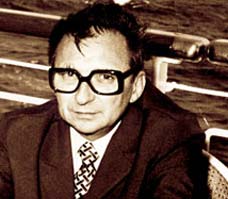
General Ioan Mihai Pacepa, former chief of the Romanian foreign intelligence service and confident of the Ceausescu couple.
His defection to the West proved to be a major blow to all communist dictators and an invaluable asset that helped Ronald Reagan better understand the inner workings of communist regimes and in the end, win the Cold War.
"Alas, now the virus of Marxism with its fatal governmental takeovers has started infecting our shores. If the Democratic Party has its way, it will transform the United States into a socialist country in all but name. The 2010 elections could prevent that catastrophe from happening.
Colleague of Murdered Orthodox Priest Beaten in Moscow By Radical Muslims
RIA Novosti
A colleague of Russian Orthodox priest Daniil Sysoyev who was recently murdered in Moscow has been beaten.
The attack occurred on Saturday as priest Vitaly Zubkov was on his way to the St. Thomas church. "Three men attacked me. They struck me down and kicked me. At first, they beat me on the head and legs," Zubkov said.
Kirill Frolov, a friend of Sysoyev, said the attack on Zubkov was hardly accidental "taking into account that Father Vitaly was a friend of murdered missionary Father Daniil Sysoyev and that there were no attempts to rob him."
Sysoyev, 34, was shot down in his St. Thomas church in southern Moscow by a masked gunman on November 19. He was known for his active missionary work in converting Muslims and people seeking to quit religious sects into Christianity.
The priest, who was married with three children, had received numerous death threats.
Sysoyev was laid to rest at a church cemetery in the Russian capital on November 23.
Patriarch Kirill, who leads the Russian Orthodox Church, said by the coffin: "Being unable to offer any wise arguments against a priest's words in their mind and heart, and going against God's word, they cover him with libel and even raise their hand at him."


All of the wingnut blogs are screaming that in his statement about the Northwest 253 terror attack, President Obama called the alleged terrorist an “isolated extremist.”
“A full investigation has been launched into this attempted act of terrorism, and we will not rest until we find all who were involved and hold them accountable.Wait a minute Chucky! So which one of the two contradicting statements issued by your Savior Obama in the same speech is true? Was the underwear bomber an isolated extremist (like in all by himself, lone wolf, sudden jihad syndrome case) or was he part of of a larger Al-Quaeda plot in which case he is NOT just an "isolated extremist" but a terrorist acting on behalf of the most dangerous and deadliest enemy of America?
I agree that he didn't mean that the terrorist acted alone. So what the heck DID he mean?
Well, if you stop trying to find something evil in it, his statement is amazingly clear: the terrorist was "isolated" on the plane, as in, he was the only terrorist on the plane.

Charles #21
This is the kind of sick crap that's all over the right wing blogosphere:
[Link: transsylvaniaphoenix.blogspot.com...]
The blogger who posted this is a blatant liar who tried to deny he posted a comment at LGF advocating mass deportations -- I outed him as a liar, and he just continued lying.

"The FDA has released information concerning non-steroidal anti-inflammatory drugs for pets -- including Metacam, Deramaxx, Previcox and Rimadyl -- that shows they have been connected to 22,000 cases of illness in dogs, almost 3,000 of which were fatal."
"The Previcox apparently starts first by forming ulcers on the stomach and as more Previcox is administered it becomes ulcer upon ulcer until the stomach acids (full of Previcox) begin to leak out. It seams it first attacks the kidneys and liver. Then it begins to destroy all the protective membranes that are protecting all of the other organs. In the end it makes its final attack on the heart."



A Moscow Patriarchate official called Father Sysoyev a “talented missionary” whose work among Muslims, including Tatars, might have been the motive for the shooting.
“I don’t exclude that the murder is connected to the fact that he preached among and baptized those who belong to Muslim culture,” the official, who spoke on the condition of anonymity because he was not authorized to talk with the news media, said in a telephone interview.
Father Sysoyev had spoken out in opposition to Islam and had warned Russian women against marrying Muslim men.
Anatoly Bagmet, an official of the prosecutor’s office, said there was reason to believe that the shooting took place “on religious grounds,” the news agency reported.
...a security team on board the Maersk Alabama responded the attack with small-arms fire, long-range acoustical devices painful to the human ear and evasive maneuvers to thwart the attack, the Navy said in a statement.
Pirates in Xarardheere, one of their strongholds in Somalia, said Wednesday that some of their colleagues had been killed Tuesday night.
| George W. Bush Visits Fort Hood, Wounded Soldiers FORT HOOD, Texas (AP) ― Former President George W. Bush and his wife, Laura, visited wounded soldiers and their families near the site of the worst mass shooting on an Army post in the United States. The Bushes made their private visit to Fort Hood's Darnall Army Medical Center on Friday night. Bush spokesman David Sherzer said in an e-mail that the couple thanked Fort Hood's military leaders and hospital staff for the "amazing care they are providing." ------------ Link |
11:25AM THE PRESIDENT addresses the House Democratic Caucus - Cannon House Office Building
2:30PM THE PRESIDENT makes a statement to the press on Health Care - Rose Garden
2:45PM THE PRESIDENT and THE FIRST LADY depart The White House en route Camp David - South Lawn
Dear President Obama,
We have written this letter because, as intellectuals and former policy-makers in central and eastern Europe (CEE), we care deeply about the future of the transatlantic relationship as well as the future quality of relations between the United States and the countries of our region. We write in our personal capacity as individuals who are friends and allies of the United States as well as committed Europeans.
Our nations are deeply indebted to the United States. Many of us know firsthand how important your support for our freedom and independence was during the dark cold-war years. US engagement and support was essential for the success of our democratic transitions after the iron curtain fell in 1989. Without Washington's vision and leadership, it is doubtful that we would be in Nato and even the European Union today.
We have worked to reciprocate and make this relationship a two-way street. We are Atlanticist voices within Nato and the EU. Our nations have been engaged alongside the United States in the Balkans, Iraq, and today in Afghanistan. While our contribution may at times seem modest compared to your own, it is significant when measured as a percentage of our population and GDP. Having benefited from your support for liberal democracy and liberal values in the past, we have been among your strongest supporters when it comes to promoting democracy and human rights around the world.
Twenty years after the end of the cold war, however, we see that central and eastern European countries are no longer at the heart of American foreign policy. As your administration sets its foreign-policy priorities, our region is one part of the world that Americans have largely stopped worrying about. Indeed, at times we have the impression that US policy was so successful that many American officials have now concluded that our region is fixed once and for all - and that they could "check the box" and move on to other more pressing strategic issues. Relations have been so close that many on both sides assume that the region's transatlantic orientation, as well as its stability and prosperity, would last forever.
A new opening
That view is premature. All is not well either in our region or in the transatlantic relationship. Central and eastern Europe is at a political crossroads and today there is a growing sense of nervousness in the region. The global economic crisis is impacting on our region and, as elsewhere, carries the risk that our societies will look inward and be less engaged with the outside world. At the same time, storm-clouds are starting to gather on the foreign-policy horizon. Like you, we await the results of the EU commission's investigation on the origins of the Russia-Georgia war of August 2008. But the political effect of that war on the region has already been felt. Many countries were deeply disturbed to see the Atlantic alliance stand by as Russia violated the core principles of the Helsinki Final Act (1975), the Charter of Paris (1990), and the territorial integrity of a country that was a member of Nato's Partnership for Peace and the Euro-Atlantic Partnership Council - all in the name of defending a sphere of influence on its borders.
Despite the efforts and significant contribution of the new members, Nato today seems weaker than when we joined. In many of our countries it is perceived as less and less relevant - and we feel it. Although we are full members, people question whether Nato would be willing and able to come to our defence in some future crises. Europe's dependence on Russian energy also creates concern about the cohesion of the alliance. Your remark at the Nato summit of 3-4 April 2009 on the need to provide credible defence plans for all alliance members was welcome, but not sufficient to allay fears about the alliance´s defence readiness. Our ability to continue to sustain public support at home for our contributions to alliance missions abroad also depends on us being able to show that our own security concerns are being addressed in Nato and close cooperation with the United States
We must also recognise that America's popularity and influence have fallen in many of our countries as well. Public-opinion polls, including the German Marshall Fund's own Transatlantic Trends survey, show that our region has not been immune to the wave of criticism and anti-Americanism that has swept Europe in recent years and which led to a collapse in sympathy and support for the United States during the George W Bush years. Some leaders in the region have paid a political price for their support of the unpopular war in Iraq. In the future they may be more careful in taking political risks to support the United States. We believe that the onset of a new administration has created a new opening to reverse this trend; but it will take time and work on both sides to make up for what we have lost.
A period of transition
In many ways the European Union has become the major factor and institution in our lives. To many people it seems more relevant and important today than the link to the United States. To some degree it is a logical outcome of the integration of central and eastern Europe into the EU. Our leaders and officials spend much more time in EU meetings than in consultations with Washington, where they often struggle to attract attention or make our voices heard. The region's deeper integration in the EU is of course welcome and should not necessarily lead to a weakening of the transatlantic relationship. The hope was that integration of central and eastern Europe into the EU would actually strengthen the strategic cooperation between Europe and America.
However, there is a danger that instead of being a pro-Atlantic voice in the EU, support for a more global partnership with Washington in the region might wane over time. The region does not have the tradition of assuming a more global role. Some items on the transatlantic agenda, such as climate change, do not resonate in the central and eastern European publics to the same extent as they do in western Europe.
Leadership change is also coming in central and eastern Europe. Next to those, there are fewer and fewer leaders who emerged from the revolutions of 1989 who experienced Washington's key role in securing our democratic transition and anchoring our countries in Nato and the EU. A new generation of leaders is emerging who do not have these memories and follow a more "realistic" policy. At the same time, the former communist elites, whose insistence on political and economic power significantly contributed to the crises in many CEE countries, gradually disappear from the political scene. The current political and economic turmoil and the fallout from the global economic crisis provide additional opportunities for the forces of nationalism, extremism, populism, and anti-semitism across the continent but also in some our countries.
This means that the United States is likely to lose many of its traditional interlocutors in the region. The new elites replacing them may not share the idealism - or have the same relationship to the United States - as the generation who led the democratic transition. They may be more calculating in their support of the United States as well as more parochial in their world view. And in Washington a similar transition is taking place as many of the leaders and personalities we have worked with and relied on are also leaving politics.
A time to reinvest
Then there is the issue of how to deal with Russia. Our hopes that relations with Russia would improve and that Moscow would finally fully accept our complete sovereignty and independence after joining Nato and the EU have not been fulfilled. Instead, Russia is back as a revisionist power pursuing a 19th-century agenda with 21st-century tactics and methods. At a global level, Russia has become, on most issues, a status-quo power. But at a regional level and vis-à-vis our nations, it increasingly acts as a revisionist one. It challenges our claims to our own historical experiences. It asserts a privileged position in determining our security choices. It uses overt and covert means of economic warfare, ranging from energy blockades and politically motivated investments to bribery and media manipulation in order to advance its interests and to challenge the transatlantic orientation of central and eastern Europe.
We welcome the "reset" of the American-Russian relations. As the countries living closest to Russia, obviously nobody has a greater interest in the development of the democracy in Russia and better relations between Moscow and the west than we do. But there is also nervousness in our capitals. We want to ensure that too narrow an understanding of western interests does not lead to the wrong concessions to Russia. Today the concern is, for example, that the United States and the major European powers might embrace the Medvedev plan for a "concert of powers" to replace the continent's existing, value-based security structure. The danger is that Russia's creeping intimidation and influence-peddling in the region could over time lead to a de facto neutralization of the region. There are differing views within the region when it comes to Moscow's new policies. But there is a shared view that the full engagement of the United States is needed.
Many in the region are looking with hope to the Barack Obama administration to restore the Atlantic relationship as a moral compass for their domestic as well as foreign policies. A strong commitment to common liberal democratic values is essential to our countries. We know from our own historical experience the difference between when the United States stood up for its liberal democratic values and when it did not. Our region suffered when the United States succumbed to "realism" at the Yalta conference (February 1945). And it benefited when the United States used its power to fight for principle. That was critical during the cold war and in opening the doors of Nato. If a "realist" view had prevailed in the early 1990s, we would not be in Nato today and the idea of a Europe whole, free, and at peace would be a distant dream.
We understand the heavy demands on your administration and on US foreign policy. It is not our intent to add to the list of problems you face. Rather, we want to help by being strong Atlanticist allies in a US-European partnership that is a powerful force for good around the world. But we are not certain where our region will be in five or ten years time given the domestic and foreign policy uncertainties we face. We need to take the right steps now to ensure the strong relationship between the United States and central and eastern Europe over the past twenty years will endure.
We believe this is a time both the United States and Europe need to reinvest in the transatlantic relationship. We also believe this is a time when the United States and central and eastern Europe must reconnect around a new and forward-looking agenda. While recognising what has been achieved in the twenty years since the fall of the iron curtain, it is time to set a new agenda for close cooperation for the next twenty years across the Atlantic.
A new programme
Therefore, we propose the following six steps:
First, we are convinced that America needs Europe and that Europe needs the United States as much today as in the past. The United States should reaffirm its vocation as a European power and make clear that it plans to stay fully engaged on the continent even while it faces the pressing challenges in Afghanistan and Pakistan, the wider middle east, and Asia. For our part we must work at home in our own countries and in Europe more generally to convince our leaders and societies to adopt a more global perspective and be prepared to shoulder more responsibility in partnership with the United States.
Second, we need a renaissance of Nato as the most important security link between the United States and Europe. It is the only credible hard power security guarantee we have. Nato must reconfirm its core function of collective defense even while we adapt to the new threats of the 21st century. A key factor in our ability to participate in Nato's expeditionary missions overseas is the belief that we are secure at home. We must therefore correct some self-inflicted wounds from the past. It was a mistake not to commence with proper Article 5-related defence planning for new members after Nato was enlarged. Nato needs to make the alliance's commitments credible and provide strategic reassurance to all members. This should include contingency planning, prepositioning of forces, equipment, and supplies for reinforcement in our region in case of crisis as originally envisioned in the Nato-Russia Founding Act.
We should also rethink the working of the Nato-Russia Council and return to the practice where Nato member-countries enter into dialogue with Moscow with a coordinated position. When it comes to Russia, our experience has been that a more determined and principled policy toward Moscow will not only strengthen the west's security but will ultimately lead Moscow to follow a more cooperative policy as well. Furthermore, the more secure we feel inside Nato, the easier it will also be for our countries to reach out to engage Moscow on issues of common interest. That is the dual-track approach we need and which should be reflected in the new Nato strategic concept.
Third, the thorniest issue may well be America's planned missile-defence installations. Here too, there are different views in the region, including among our publics which are divided. Regardless of the military merits of this scheme and what Washington eventually decides to do, the issue has nevertheless also become - at least in some countries - a symbol of America's credibility and commitment to the region. How it is handled could have a significant impact on their future transatlantic orientation. The small number of missiles involved cannot be a threat to Russia's strategic capabilities, and the Kremlin knows this. We should decide the future of the programme as allies and based on the strategic plusses and minuses of the different technical and political configurations. The alliance should not allow the issue to be determined by unfounded Russian opposition. Abandoning the programme entirely or involving Russia too deeply in it without consulting Poland or the Czech Republic can undermine the credibility of the United States across the whole region.
Fourth, we know that Nato alone is not enough. We also want and need more Europe and a better and more strategic US-EU relationship as well. Increasingly our foreign policies are carried out through the European Union - and we support that. We also want a common European foreign and defence policy that is open to close cooperation with the United States. We are the advocates of such a line in the EU. But we need the United States to rethink its attitude toward the EU and engage it much more seriously as a strategic partner. We need to bring Nato and the EU closer together and make them work in tandem. We need common Nato and EU strategies not only toward Russia but on a range of other new strategic challenges.
Fifth is energy security. The threat to energy supplies can exert an immediate influence on our nations' political sovereignty also as allies contributing to common decisions in Nato. That is why it must also become a transatlantic priority. Although most of the responsibility for energy security lies within the realm of the EU, the United States also has a role to play. Absent American support, the Baku-Tbilisi-Ceyhan pipeline would never have been built. Energy security must become an integral part of US-European strategic cooperation. Central and eastern European countries should lobby harder (and with more unity) inside Europe for diversification of the energy mix, suppliers, and transit routes, as well as for tough legal scrutiny of Russia's abuse of its monopoly and cartel-like power inside the EU. But American political support on this will play a crucial role. Similarly, the United States can play an important role in solidifying further its support for the Nabucco pipeline, particularly in using its security relationship with the main transit country, Turkey, as well as the north-south inter-connector of central Europe and LNG terminals in our region.
Sixth, we must not neglect the human factor. Our next generations need to get to know each other, too. We have to cherish and protect the multitude of educational, professional, and other networks and friendships that underpin our friendship and alliance. The US visa regime remains an obstacle in this regard. It is absurd that Poland and Romania - arguably the two biggest and most pro-American states in the CEE region, which are making substantial contributions in Iraq and Afghanistan - have not yet been brought into the visa-waiver programme. It is incomprehensible that a critic like the French anti-globalisation activist José Bové does not require a visa for the United States but former Solidarity activist and Nobel peace prizewinner Lech Walesa does. This issue will be resolved only if it is made a political priority by the president of the United States.
The steps we made together since 1989 are not minor in history. The common successes are the proper foundation for the transatlantic renaissance we need today. This is why we believe that we should also consider the creation of a Legacy Fellowship for young leaders. Twenty years have passed since the revolutions of 1989. That is a whole generation. We need a new generation to renew the transatlantic partnership. A new programme should be launched to identify those young leaders on both sides of the Atlantic who can carry forward the transatlantic project we have spent the last two decades building in central and eastern Europe.
The key to success
In conclusion, the onset of a new administration in the United States has raised great hopes in our countries for a transatlantic renewal. It is an opportunity we dare not miss. We, the authors of this letter, know firsthand how important the relationship with the United States has been. In the 1990s, a large part of getting Europe right was about getting central and eastern Europe right. The engagement of the United States was critical to locking in peace and stability from the Baltic states to the Black Sea. Today the goal must be to keep central and eastern Europe right as a stable, activist, and Atlanticist part of our broader community.
That is the key to our success in bringing about the renaissance in the alliance your administration has committed itself to work for and which we support. That will require both sides recommitting to and investing in this relationship. But if we do it right, the pay off down the road can be very real. By taking the right steps now, we can put it on new and solid footing for the future.
Signed by:
Valdas Adamkus, former president of the Republic of Lithuania
Martin Butora, former ambassador of the Slovak Republic to the United States
Emil Constantinescu, former president of the Republic of Romania
Pavol Demes, former minister of international relations and advisor to the president, Slovak Republic
Lubos Dobrovsky, former defence minister of the Czech Republic, former ambassador to Russia
Matyas Eorsi, former secretary of state of the Hungarian MFA
Istvan Gyarmati, president of the International Centre for Democratic Transition, Budapest
Vaclav Havel, former president of the Czech Republic
Rastislav Kacer, former ambassador of the Slovak Republic to the United States
Sandra Kalniete, former minister of foreign affairs of Latvia
Karel Schwarzenberg, former minister of foreign affairs, Czech Republic
Michal Kovac, former president of the Slovak Republic
Ivan Krastev, chairman of the Centre for Liberal Strategies in Sofia, Bulgaria
Alexander Kwasniewski, former president of the Republic of Poland
Mart Laar, former prime minister of Estonia
Kadri Liik, director of the International Centre for Defence Studies in Tallinn, Estonia
Janos Martonyi , former minister of foreign affairs, Hungary
Janusz Onyszkiewicz, former vice-president of the European Parliament, former defence minister, Poland
Adam Rotfeld, former minister of foreign affairs, Poland
Alexandr Vondra, former minister of foreign affairs and deputy prime minister, Czech Republic
Vaira Vike-Freiberga, former president of the Republic of Latvia
Lech Walesa, former president of the Republic of Poland

Tired from a tough hike? Rescuers fear Yuppie 911Read the complete story here
By TRACIE CONE
Associated Press Writer
Tuesday, November 03, 2009
FRESNO, Calif. -- Last month two men and their teenage sons tackled one of the world's most unforgiving summertime hikes: the Grand Canyon's parched and searing Royal Arch Loop. Along with bedrolls and freeze-dried food, the inexperienced backpackers carried a personal locator beacon -- just in case.
In the span of three days, the group pushed the panic button three times, mobilizing helicopters for dangerous, lifesaving rescues inside the steep canyon walls. What was that emergency? The water they had found to quench their thirst "tasted salty."
If they had not been toting the device that works like Onstar for hikers, "we would have never attempted this hike," one of them said after the third rescue crew forced them to board their chopper. It's a growing problem facing the men and women who risk their lives when they believe others are in danger of losing theirs.
Republican Dede Scozzafava endorsed her former Democratic opponent Sunday in the race for an upstate New York congressional seat, shaking up the contest for the second day in a row after exiting the race Saturday.
Scozzafava dropped out after Conservative Party candidate Doug Hoffman experienced a late-in-the-game surge. The move was expected to consolidate GOP voters behind Hoffman on Tuesday.
But on Sunday, Scozzafava issued a written statement in which she backed Democrat Bill Owens.
"I am supporting Bill Owens for Congress and urge you to do the same," she said. "In Bill Owens, I see a sense of duty and integrity that will guide him beyond political partisanship. He will be an independent voice devoted to doing what is right for New York. Bill understands this district and its people, and when he represents us in Congress he will put our interests first."